Updated October 20, 2026
Good news for people receiving Social Security benefits: monthly payments will increase in 2027.
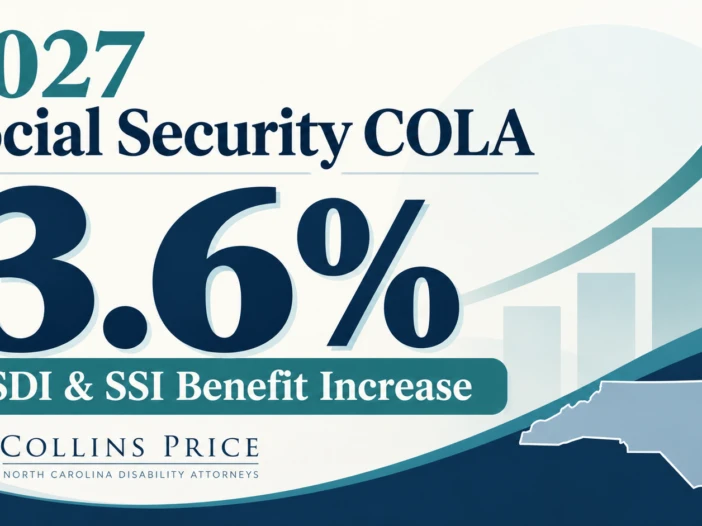
On October 14, 2026, the Social Security Administration (SSA) announced a 3.6% cost-of-living adjustment (COLA) for 2027. This increase applies to Social Security retirement, Social Security Disability Insurance (SSDI), and Supplemental Security Income (SSI) benefits.
For people living with disabilities in North Carolina, even a small increase in monthly benefits can make a difference. Higher payments may help cover food, housing, medical expenses, and other everyday needs. But how much more money will you receive? When will the increase begin? And does the 2027 COLA change who qualifies for disability benefits?
This article explains the new Social Security COLA increase for 2027, including updated SSDI and SSI payment amounts, important work-related limits, and what North Carolina disability applicants and recipients should know.
Quick Answer: How Much Is the Social Security COLA Increase for 2027?
The Social Security COLA increase for 2027 is 3.6%, up from 2.8% in 2026.
According to the Social Security Administration’s official 2027 COLA announcement, approximately 76 million Americans receiving Social Security or SSI will benefit from the adjustment.
Here are the most important changes for disability recipients:
| Benefit or Limit | 2026 | 2027 |
|---|---|---|
| Social Security COLA | 2.8% | 3.6% |
| Average monthly SSDI benefit | $1,642* | $1,701* |
| Maximum federal SSI payment (individual) | $994 | $1,029 |
| Maximum federal SSI payment (eligible couple) | $1,491 | $1,544 |
| SGA limit (non-blind) | $1,690 | $1,770 |
| SGA limit (blind) | $2,830 | $2,950 |
| Trial Work Period earnings threshold | $1,210 | $1,270 |
The SSDI figures are Social Security’s estimated average monthly payments before and after the 2027 adjustment, not a guaranteed payment amount for any individual.
These figures come from the SSA’s official 2027 COLA Fact Sheet.
The payment increase happens automatically. If you already receive SSDI or SSI, you do not need to file a new application to receive the COLA.
What Is a Social Security Cost-of-Living Adjustment?
A cost-of-living adjustment, often called COLA, is an annual increase in Social Security benefits. The purpose is simple: to help benefits keep up with rising prices. Over time, the cost of groceries, housing, transportation, and medical care can increase. Without adjustments, people who depend on Social Security could lose buying power.
The Social Security Administration uses a measure of inflation called the Consumer Price Index for Urban Wage Earners and Clerical Workers, or CPI-W. The CPI-W tracks changes in the prices of goods and services purchased by consumers. Social Security compares price levels during the third quarter of each year, which includes July, August, and September.
When the index rises, Social Security may increase benefits. Congress established automatic cost-of-living adjustments in the 1970s. Automatic COLAs began in 1975.
You can read more about how Social Security calculates COLA on the SSA website.
Will Social Security Disability Benefits Increase in 2027?
Yes. People receiving Social Security Disability Insurance will receive the 3.6% COLA increase in 2027. SSDI is a federal program for people who have worked and paid Social Security taxes but can no longer work because of a qualifying disability. Unlike SSI, SSDI monthly benefits are based largely on your earnings history. This means two people receiving SSDI may have very different monthly benefit amounts.
How Much Will the Average SSDI Payment Increase?
Social Security estimates that the average monthly SSDI payment for a disabled worker will increase from $1,642 to $1,701 in January 2027. That is an increase of about $59 per month, or $708 over a full year. Your personal increase may be higher or lower.
For example, someone receiving $1,500 per month in SSDI benefits would see an increase of approximately $54 per month with a 3.6% adjustment, before any deductions or applicable rounding. The final amount you receive depends on your individual benefit amount and any deductions. This is an important difference from news reports that say Social Security recipients will receive an extra $75 per month. That figure refers to the estimated average increase for retired workers, not disabled workers.
If you want to understand how SSDI benefits are calculated, read our guide on how much SSDI pays in North Carolina.
How Much Will SSI Payments Increase in 2027?
Supplemental Security Income payments will also increase by 3.6% in 2027. SSI is different from SSDI. It helps people who are disabled, blind, or age 65 or older and who have very limited income and resources. Unlike SSDI, SSI does not require a history of working and paying Social Security taxes.
For 2027, the maximum federal SSI payment amounts will be:
- $1,029 per month for an eligible individual, up from $994 in 2026.
- $1,544 per month for an eligible couple, up from $1,491 in 2026.
That represents an increase of $35 per month for an individual receiving the full federal payment and $53 per month for an eligible couple receiving the full federal couple payment. However, not everyone receiving SSI gets the maximum amount. Your payment may be lower depending on your income, living arrangements, and other factors.
Will the SSI Resource Limits Increase in 2027?
No. Although the monthly SSI payment amounts are increasing, the federal SSI resource limits remain unchanged.
In 2027, the general resource limits are still:
- $2,000 for an individual
- $3,000 for an eligible couple
Social Security excludes certain resources when applying these limits, such as a home you live in and, under applicable rules, a vehicle. This distinction matters. A higher monthly SSI benefit does not mean Social Security has raised the amount of countable savings or other resources you can have. If you are confused about which disability program applies to you, see our guide to SSDI vs. SSI in North Carolina.
When Will the 2027 Social Security COLA Increase Begin?
The payment date depends on which benefits you receive.
SSDI and Social Security Benefits
People receiving SSDI or Social Security retirement benefits will generally see the new payment amount beginning in January 2027. Your regular payment date depends on Social Security’s payment schedule and your circumstances. Most recipients will receive their increased benefits on their usual payment date in January.
SSI Benefits
SSI recipients will see their increased January 2027 payment on December 31, 2026.
This is because January 1 is a federal holiday, and Social Security sends SSI payments early when the regular payment date falls on a weekend or federal holiday. The December 31 payment is your January SSI benefit. It is not an extra payment for December.
If you receive both SSDI and SSI, the timing of your payments may differ.
For more details, see the SSA’s explanation of when the 2027 COLA takes effect.
How Will I Know My New Social Security Benefit Amount?
Social Security will notify beneficiaries of their updated payment amounts. You do not have to calculate the increase yourself. The SSA says recipients can view their COLA notices through their personal my Social Security accounts beginning in late November or early December 2026, depending on their account and notification settings.
People who are not enrolled in paperless notices will generally receive a letter by mail in December.
Your notice should show:
- Your updated monthly benefit amount
- Any deductions from your benefits
- When your new payment will begin
If you do not have an online account, you can create one at my Social Security. Be sure that Social Security has your correct mailing address, especially if you recently moved.
Will Medicare Premiums Affect My COLA Increase?
Yes, they can.
Some SSDI recipients are enrolled in Medicare and have their Medicare Part B premiums deducted from their Social Security payments. If Medicare premiums increase, part of your COLA adjustment may go toward those costs. This means your actual bank deposit may increase by less than 3.6%, even though your Social Security benefit amount received the full COLA adjustment.
Your personal benefit notice should help explain the difference between your gross benefit and the payment you receive after deductions.
Does the 2027 COLA Change Who Qualifies for Social Security Disability?
The COLA increase does not change Social Security’s basic medical definition of disability. To qualify for disability benefits, you generally must have a medical condition that prevents you from performing substantial gainful activity and that has lasted, or is expected to last, at least 12 months or result in death.
Social Security may review:
- Your medical records
- Your diagnosis and treatment
- Your symptoms and limitations
- Your ability to perform work activities
- Your past employment
- Your age, education, and work experience, when applicable
The COLA increase does not automatically make someone eligible for disability. However, some work-related earnings thresholds also change each year. Those changes can affect people who are applying for benefits or who are already receiving SSDI.
What Is the 2027 SGA Limit for Social Security Disability?
One important change for disability applicants is the new Substantial Gainful Activity limit. Substantial Gainful Activity, or SGA, is Social Security’s term for work that involves significant activities and is performed for pay or profit. When someone applies for disability, Social Security generally looks at whether their work and countable earnings exceed the SGA level.
The 2027 SGA limits are:
- $1,770 per month for non-blind individuals, up from $1,690 in 2026.
- $2,950 per month for statutorily blind individuals receiving Social Security disability benefits, up from $2,830 in 2026.
These amounts are based on monthly countable earnings. Certain work expenses or special circumstances can affect the calculation. The higher SGA limits are separate annual adjustments and are not simply the result of applying the 3.6% COLA. If you are applying for disability while still working, these limits may affect your case.
For more information, read our article on what substantial gainful activity means in a North Carolina disability claim. Remember that earning less than SGA does not guarantee disability approval. Social Security must still decide whether you meet its medical and other eligibility rules.
Will the Trial Work Period Amount Also Increase in 2027?
Yes. The trial work period earnings threshold will increase to $1,270 per month in 2027, compared with $1,210 in 2026. A trial work period allows certain SSDI recipients to test their ability to return to work without immediately losing their disability benefits.
During a trial work period, Social Security generally allows a person to continue receiving their SSDI check while testing work for nine service months. These months do not have to occur in a row. In 2027, a month generally counts as a trial work month if earnings exceed $1,270 before taxes. Self-employment has additional rules. The trial work period is an SSDI work incentive. It does not apply to SSI.
If you currently receive SSDI and are considering returning to work, understanding these rules before accepting a job or increasing your hours can help you avoid problems. Our related articles explain what a trial work period means for Social Security Disability in North Carolina and what happens after your trial work period ends.
How Does the 2027 COLA Compare With Previous Years?
The 2027 increase of 3.6% is larger than the adjustments announced for 2024, 2025, and 2026.
Here is a look at recent Social Security COLA increases:
| Year | COLA Increase |
|---|---|
| 2023 | 8.7% |
| 2024 | 3.2% |
| 2025 | 2.5% |
| 2026 | 2.8% |
| 2027 | 3.6% |
Source: Social Security Administration COLA history.
The unusually large increase in 2023 reflected a period of high inflation. Later increases were smaller as inflation slowed. The 2027 adjustment is larger because consumer prices continued to rise during the period Social Security uses to calculate COLA. Although a larger payment can help, it does not necessarily mean recipients will be better off financially.
For many people receiving disability benefits, rising costs for housing, food, utilities, transportation, and health care remain a challenge.
What Does the 2027 COLA Mean for Disability Applicants in North Carolina?
If you are applying for Social Security Disability in North Carolina, the 2027 COLA may affect the amount of benefits you eventually receive. But it does not replace the need to qualify under Social Security’s rules.
The two main programs are:
Social Security Disability Insurance (SSDI): You generally need enough qualifying work credits and a disability that meets SSA rules. Your monthly payment is based largely on your earnings history.
Supplemental Security Income (SSI): You must meet financial requirements, as well as applicable age or disability requirements. SSI payment amounts depend on your countable income and other circumstances.
A person who is approved for disability benefits in 2027 may receive a different monthly amount than someone who was approved in an earlier year. Social Security calculates benefits using the rules and amounts that apply to the individual’s situation and entitlement dates.
If your application is still pending, the COLA announcement does not mean you need to submit a new application. However, you should continue providing Social Security with requested information and keeping your medical records up to date.
If you are just beginning the disability process, our guide on how to apply for disability in North Carolina explains the steps involved.
Do I Need to Do Anything to Receive the 2027 COLA Increase?
Most people do not need to take any action. If you already receive Social Security or SSI benefits, the COLA increase is generally applied automatically.
Still, a few simple steps can help prevent confusion:
- Review your COLA notice. Check your new benefit amount and any deductions.
- Keep your contact information current. Make sure Social Security has your correct mailing address.
- Check your bank deposits. Compare your first updated payment with the amount shown in your notice.
- Report changes that affect your benefits. If you receive SSI, continue reporting income, resources, and other required changes.
- Ask questions if something looks wrong. If your benefit amount does not match your notice, contact Social Security.
Be cautious about anyone who calls, texts, or emails saying you must pay a fee to receive your COLA increase. Social Security does not charge beneficiaries a fee to apply the annual cost-of-living adjustment.
Frequently Asked Questions About the 2027 Social Security COLA
How much is the Social Security COLA increase for 2027?
The official 2027 Social Security COLA increase is 3.6%. This applies to eligible Social Security retirement, disability, survivor, and SSI benefits.
How much will SSDI increase in 2027?
The average monthly SSDI payment for a disabled worker is estimated to increase from $1,642 to $1,701, or about $59 per month. Individual payments vary.
How much will SSI pay in 2027?
The maximum federal SSI payment for an eligible individual will be $1,029 per month in 2027. The maximum federal amount for an eligible couple will be $1,544 per month. Actual benefits may be lower based on income and other factors.
When will SSDI recipients get the 2027 COLA increase?
SSDI recipients will generally receive their increased payments beginning in January 2027, according to their regular payment schedules.
When will SSI recipients receive the 2027 increase?
The increased January 2027 SSI payment will be issued on December 31, 2026, because January 1 is a federal holiday.
Do I have to apply for the 2027 COLA increase?
No. Social Security automatically applies the annual COLA to eligible benefits. You do not need to submit a separate application.
What is the 2027 Social Security Disability income limit?
For people applying for disability, the 2027 monthly SGA amount is $1,770 for most non-blind individuals and $2,950 for statutorily blind individuals under the Social Security disability rules. Work incentives and other program rules may apply.
Will the 2027 COLA increase my Medicare premium?
The COLA itself does not set Medicare premiums. Medicare premiums are determined separately. If your premiums increase and are deducted from your Social Security benefits, your net payment may rise by less than the full COLA percentage.
Does the 2027 COLA affect SSDI or SSI benefits in North Carolina differently?
No. COLA is a federal adjustment, so the same 3.6% increase applies nationwide. However, individual benefits can differ because of work history, countable income, deductions, and other personal circumstances.
Will I receive the 2027 COLA if my disability application is still pending?
If your claim is approved, Social Security will calculate your benefits using the rules and amounts that apply to your entitlement period. You do not need to file a separate COLA request simply because your disability application is pending.
Get Help With Social Security Disability Benefits in North Carolina
For people who depend on Social Security Disability or SSI, the 2027 COLA increase offers some additional financial support. But understanding disability benefits can still be difficult. You may be unsure whether you qualify for SSDI or SSI, how much you could receive, whether you can work while receiving benefits, or what to do if Social Security denies your application.
At Collins Price, our disability attorneys help individuals and families throughout North Carolina navigate Social Security Disability claims, denials, appeals, and hearings. We serve clients in Winston-Salem, Charlotte, Greensboro, Lexington, Mount Airy, and surrounding communities.
If a medical condition prevents you from working and you need help applying for disability benefits or appealing a denial, we are here to help.
Contact Collins Price today for a free disability claim consultation. There is no obligation to hire our firm after the consultation, and we do not charge an attorney’s fee unless we win your claim.
This article provides general information about Social Security Disability and Supplemental Security Income. It is not legal advice. Benefit amounts and eligibility depend on individual circumstances. Figures reflect information released by the Social Security Administration as of October 20, 2026.