Updated October 20, 2026
If you cannot work because of a serious medical condition, you may be wondering how much Social Security Disability will pay you in 2027. For many people in North Carolina, Social Security Disability Insurance (SSDI) is an important source of income. Monthly payments help cover rent, groceries, medical bills, and other everyday expenses.
The good news is that SSDI benefits will increase in 2027. The Social Security Administration has announced a 3.6% cost-of-living adjustment (COLA) for 2027. That means most people receiving SSDI will see a higher monthly benefit starting in January.
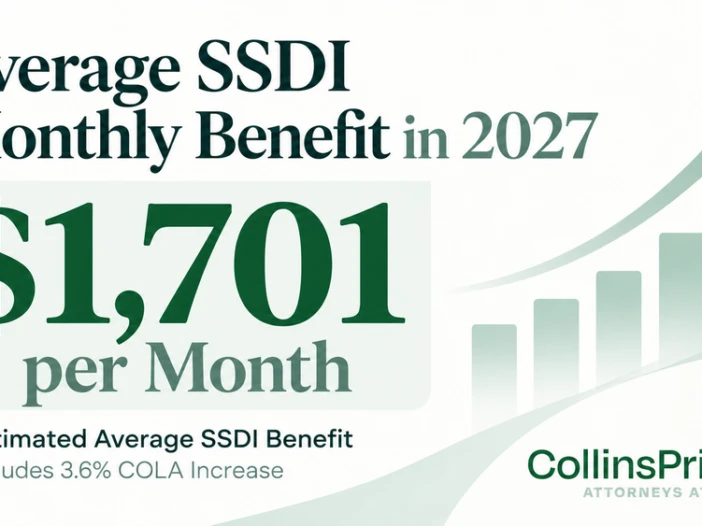
The estimated average SSDI monthly benefit in 2027 is $1,701 for a disabled worker. But your individual payment could be higher or lower depending on your work history and past earnings. This guide explains the average SSDI payment for 2027, what determines your benefit amount, and how you can find out how much you may receive.
What Is the Average SSDI Monthly Benefit in 2027?
According to the Social Security Administration’s official 2027 COLA Fact Sheet, the estimated average monthly SSDI payment for a disabled worker will increase to $1,701 in January 2027. Before the 2027 increase, Social Security estimated the average at $1,642 per month. That represents an increase of approximately $59 per month, or $708 over a full year.
Here is a breakdown of the changes:
| SSDI Benefit | Before 2027 COLA | After 2027 COLA |
|---|---|---|
| Average disabled worker | $1,642 | $1,701 |
| Average disabled worker with spouse and one or more children | $2,970 | $3,077 |
These are estimated national averages. The second row reflects combined family benefits, not the amount paid to the disabled worker alone. Your personal benefit amount may be very different.
Some people receive less than $1,000 per month. Others receive more than $2,000 or $3,000, depending on their Social Security earnings record. There is no single SSDI payment amount that everyone receives.
Why Are SSDI Benefits Increasing in 2027?
Social Security increases benefits in some years to help people keep up with rising prices. This is called a cost-of-living adjustment, or COLA. For 2027, Social Security announced a 3.6% COLA increase on October 14, 2026. The increase applies to eligible Social Security retirement, disability, and survivor benefits. Supplemental Security Income (SSI) payments will also increase. The adjustment is based on changes in consumer prices.
If you already receive SSDI, you do not have to apply for the increase. Social Security generally adjusts your benefit automatically. Your new payment amount will depend on your current benefit. You can learn more about annual benefit increases directly from the Social Security Administration’s COLA information page.
How Does Social Security Calculate Your SSDI Payment?
One of the most common questions we hear from disability applicants is, “How much will I get each month if I am approved?” The answer depends mostly on how much you earned while you were working. SSDI is funded by Social Security taxes paid by workers and employers. When you apply, Social Security reviews your earnings record and uses a formula to calculate your benefit.
Your Past Earnings Matter
Social Security looks at your earnings from jobs where you paid Social Security taxes. It adjusts past earnings to account for changes in wage levels over time. Then it uses a formula to determine your monthly benefit. This calculation is based on what Social Security calls your Average Indexed Monthly Earnings (AIME).
You do not need to calculate this yourself. Social Security maintains your earnings record and determines your benefit using its own formulas. In general, people with higher covered earnings over their working years may receive higher SSDI payments.
Your Work Credits Determine Eligibility
Work credits are also important, but they serve a different purpose. You earn Social Security work credits by working and paying Social Security taxes. To qualify for SSDI, you generally need enough credits, including enough recent work, based on your age and circumstances. Work credits help determine whether you qualify for SSDI.
However, having more credits than required does not automatically mean you will receive a larger monthly payment. Your benefit amount depends on your earnings record and Social Security’s calculation.
Does Your Age Affect Your SSDI Payment?
Age can affect how Social Security evaluates your disability claim and the work history used in your benefit calculation. However, SSDI benefits are not reduced simply because you become disabled at a younger age. This is different from Social Security retirement benefits, which may be reduced if someone starts collecting retirement payments before reaching full retirement age.
For SSDI, Social Security calculates your benefit based on your covered earnings and other applicable rules. If you want a more detailed explanation, read our article about how much SSDI pays in North Carolina.
What Is the Maximum SSDI Benefit in 2027?
There is an important difference between the average SSDI payment and the maximum benefit a person may qualify to receive. Many websites publish a single maximum Social Security benefit amount. However, those figures often refer to retirement benefits rather than disability benefits.
For example, Social Security’s 2027 fact sheet lists a maximum monthly retirement benefit of $4,188 for a worker retiring at full retirement age in 2027.
That $4,188 figure is not a general maximum SSDI payment.
SSDI benefits are calculated using a person’s covered earnings history and Social Security’s disability benefit rules. People with a long history of high earnings may qualify for larger monthly payments than the national average. But you should not assume you will receive the maximum simply because you worked for many years.
Social Security must calculate your benefit based on your own earnings record. The best way to understand your potential benefit is to review your personal Social Security information rather than relying on a general maximum amount found online.
How Can You Find Out Your SSDI Benefit Amount?
If you are considering applying for Social Security Disability, you may be able to check an estimate of your future benefits online. The easiest place to start is your personal Social Security account.
Visit my Social Security to create an account or sign in.
Depending on your eligibility and account status, you may be able to:
- Review your Social Security earnings history.
- See an estimate of disability benefits.
- Check your current benefit amount if you already receive payments.
- Review payment history.
- Access important notices from Social Security.
If you are already receiving benefits, your annual COLA notice should show your updated monthly amount. Social Security is expected to make 2027 COLA notices available beginning in late November or early December 2026 for many beneficiaries. You may also contact Social Security at 1-800-772-1213 if you need help understanding your benefit information.
Is SSDI the Same as SSI?
No. SSDI and SSI are two different programs. This is important because the monthly payment amounts are calculated differently.
Social Security Disability Insurance (SSDI) is generally based on your work history and the Social Security taxes you paid.
Supplemental Security Income (SSI) is a needs-based program for people who meet certain age or disability requirements and have limited income and resources.
For 2027, the maximum federal SSI payment will be:
- $1,029 per month for an eligible individual.
- $1,544 per month for an eligible couple.
These are maximum federal SSI payment amounts, not average SSDI payments. Some people receive less than the maximum SSI amount because they have other countable income or because of their living arrangements. It is also possible to qualify for both SSDI and SSI if you meet the requirements for both programs.
If your SSDI payment is relatively low, it may be worth finding out whether you qualify for additional assistance through SSI. For a closer look at the programs, read our guide to SSDI vs. SSI in North Carolina.
Can Your Spouse or Children Receive SSDI Benefits?
In some situations, qualifying family members may receive benefits based on your Social Security earnings record. Eligible family members may include certain spouses and children.
However, not every family member automatically qualifies. Social Security has rules about age, marital status, disability, and other eligibility requirements. There is also a limit on the total amount that certain family members can receive based on one worker’s record.
This is called the family maximum. For January 2027, Social Security estimates the average combined monthly benefit for a disabled worker, spouse, and one or more children will be $3,077. That does not mean every family will receive $3,077. The actual amount depends on the worker’s benefit and which family members qualify. If you are applying for SSDI and have dependent children, make sure you ask Social Security whether they may qualify for benefits.
Why Is My SSDI Check Less Than the Average?
If you receive less than the national SSDI average, that does not necessarily mean Social Security made a mistake.
There are several reasons why your payment may be lower.
1. Your Earnings History
Your monthly SSDI amount is based largely on your past earnings.
If you had lower earnings during your working years, your SSDI benefit may also be lower.
Periods when you were unable to work may affect your earnings record, although Social Security’s disability calculation includes special rules that can account for some years.
2. Workers’ Compensation Benefits
If you receive workers’ compensation or certain other public disability benefits, Social Security may reduce your SSDI payment.
This is called an offset.
The amount depends on the benefits you receive and your individual circumstances.
3. Medicare Premiums
Some SSDI recipients have Medicare premiums deducted from their monthly Social Security payments.
If you pay Medicare Part B premiums through Social Security, your bank deposit may be smaller than your full SSDI benefit amount.
Changes in Medicare premiums may also affect how much of your 2027 COLA increase you actually receive.
4. Taxes or Other Withholding
Depending on your total income, part of your SSDI benefits may be subject to federal income taxes.
Certain other deductions or legal withholding orders may also affect your monthly payment.
5. Social Security Overpayments
If Social Security previously paid you more than you were entitled to receive, the agency may withhold part of your monthly payment to recover the overpayment.
You may have options to appeal an overpayment determination, request a waiver, or discuss repayment terms, depending on your situation.
If your SSDI payment is unexpectedly low, review your benefit notice and ask Social Security for an explanation.
Can You Work While Receiving SSDI in 2027?
Some people receiving SSDI want to try returning to work.
Others need to work limited hours because their disability payments do not cover all their expenses.
Working while receiving SSDI is possible in some situations. But you need to understand Social Security’s rules.
What Is the 2027 SGA Limit?
Substantial Gainful Activity, or SGA, is a level of work that Social Security considers substantial.
For 2027, the monthly SGA amounts are:
- $1,770 for most non-blind individuals.
- $2,950 for individuals who meet Social Security’s statutory blindness rules.
These limits are especially important when applying for disability benefits. Social Security generally considers whether your work and earnings show that you can perform substantial work. Certain deductions, work incentives, and special rules may affect how your earnings are counted. Earning less than the SGA limit does not automatically mean your claim will be approved.
For more information, read what substantial gainful activity means in a North Carolina disability claim.
What Is the Trial Work Period Amount for 2027?
If you already receive SSDI, you may qualify for a trial work period. This rule allows eligible recipients to test their ability to return to work without immediately losing SSDI payments because of their earnings. In 2027, a month generally counts as a trial work month when your gross earnings are more than $1,270. Special rules apply to self-employment.
A trial work period can include nine service months within a rolling 60-month period. Those months do not have to be consecutive. After you complete your trial work period, different earnings rules apply during the Extended Period of Eligibility. You can read our related articles on trial work periods for SSDI in North Carolina and what happens after a trial work period ends. Before returning to work or increasing your hours, make sure you understand how your earnings may affect your benefits.
When Will SSDI Payments Be Sent in 2027?
SSDI benefits are generally paid once per month.
For many people, the payment date depends on their birthday.
The usual schedule is:
| Birthday | SSDI Payment Date |
|---|---|
| 1st–10th | Second Wednesday of the month |
| 11th–20th | Third Wednesday of the month |
| 21st–31st | Fourth Wednesday of the month |
Some recipients follow a different schedule. For example, people who receive both Social Security and SSI may receive their Social Security payment on the third day of the month.
Other exceptions can also apply. Social Security benefits are generally paid for the previous month. This means your January 2027 SSDI payment generally represents your December 2026 benefit entitlement with the applicable 2027 COLA increase. You can check Social Security’s official payment schedule and benefit information for more details.
What Happens If You Are Approved for SSDI in 2027?
If you apply for SSDI in 2027 and Social Security approves your claim, the agency will calculate your monthly benefit using your earnings record and the rules that apply to your case. Your payment is not automatically set at the national average of $1,701.
You could qualify for more or less. You may also qualify for past-due benefits, often called back pay, depending on your disability onset date, application date, and entitlement rules.
Most SSDI applicants are subject to a five-month waiting period before cash benefits begin. Certain exceptions apply. Because disability claims can take time, understanding your possible benefit amount and any past-due benefits is an important part of the process. If you have not yet applied, our guide on how to apply for disability in North Carolina explains the steps involved.
What If You Cannot Live on Your SSDI Payment?
Living on disability benefits can be difficult, especially when medical expenses and basic living costs continue to rise. If your SSDI payment is not enough, you may want to find out whether you qualify for other forms of assistance.
Depending on your income and circumstances, these may include:
- Supplemental Security Income (SSI).
- Supplemental Nutrition Assistance Program (SNAP) benefits.
- Medicaid or other medical assistance.
- Medicare Savings Programs that may help with certain Medicare costs.
- Local housing, food, or utility assistance programs.
Eligibility rules vary. Remember that SSDI and SSI have different financial requirements. A person who does not qualify for SSI may still qualify for SSDI. If you believe your SSDI payment was calculated incorrectly, you can also ask Social Security to review the issue and explain your appeal rights.
Frequently Asked Questions About SSDI Payments in 2027
How much is the average SSDI payment in 2027?
The Social Security Administration estimates that the average monthly SSDI payment for a disabled worker will be $1,701 in January 2027. Individual payments depend on each person’s earnings record.
How much will SSDI increase in 2027?
Social Security announced a 3.6% COLA increase for 2027. The estimated average SSDI payment will rise by approximately $59 per month, from $1,642 to $1,701.
What is the maximum SSDI payment in 2027?
There is no single payment amount that applies to every SSDI recipient. Benefits are based on individual earnings records. The $4,188 maximum benefit listed by Social Security for a worker retiring at full retirement age in 2027 is a retirement figure, not a general SSDI maximum.
Does everyone on SSDI get the same amount?
No. SSDI payments vary because Social Security calculates benefits using each person’s past covered earnings. People with different earnings histories may receive very different monthly payments.
Is SSDI increasing in North Carolina in 2027?
Yes. The 3.6% Social Security COLA applies nationwide, including North Carolina. The same federal calculation rules generally apply to SSDI recipients in every state.
Can I receive SSDI and SSI at the same time?
Yes, some people qualify for both programs. SSDI is generally based on work history, while SSI has financial eligibility requirements. Social Security will determine whether you qualify for one or both.
Can I work and still receive SSDI in 2027?
Sometimes. Social Security has rules that allow certain SSDI recipients to test their ability to work. How earnings affect benefits depends on whether you are applying, receiving benefits, or participating in a work incentive such as a trial work period.
How do I check my SSDI payment amount?
You can sign in to your personal my Social Security account to review available benefit estimates, payment information, and notices. You can also contact Social Security for assistance.
Will Medicare premiums reduce my SSDI increase?
They may. If Medicare premiums are deducted from your Social Security payment, an increase in those premiums could reduce the amount of additional money you receive in your bank account.
Get Help With Social Security Disability Benefits in North Carolina
Knowing the average SSDI payment in 2027 is a helpful starting point. But understanding what you personally qualify to receive can be more complicated. Your work history, medical condition, earnings record, and eligibility for different disability programs all matter.
At Collins Price, our disability attorneys help people throughout North Carolina apply for Social Security Disability benefits and appeal denied claims. We serve clients in Winston-Salem, Greensboro, Charlotte, Lexington, Mount Airy, and surrounding communities.
If a medical condition prevents you from working, you may have questions about whether you qualify for SSDI, how much you could receive, or what to do if your disability claim has been denied. Our team can help you understand the process and your next steps.
Contact Collins Price today for a free disability claim consultation.
This article is for general information only and is not legal advice. Social Security benefits and eligibility depend on individual circumstances. The 2027 figures reflect official Social Security Administration announcements available as of October 20, 2026.